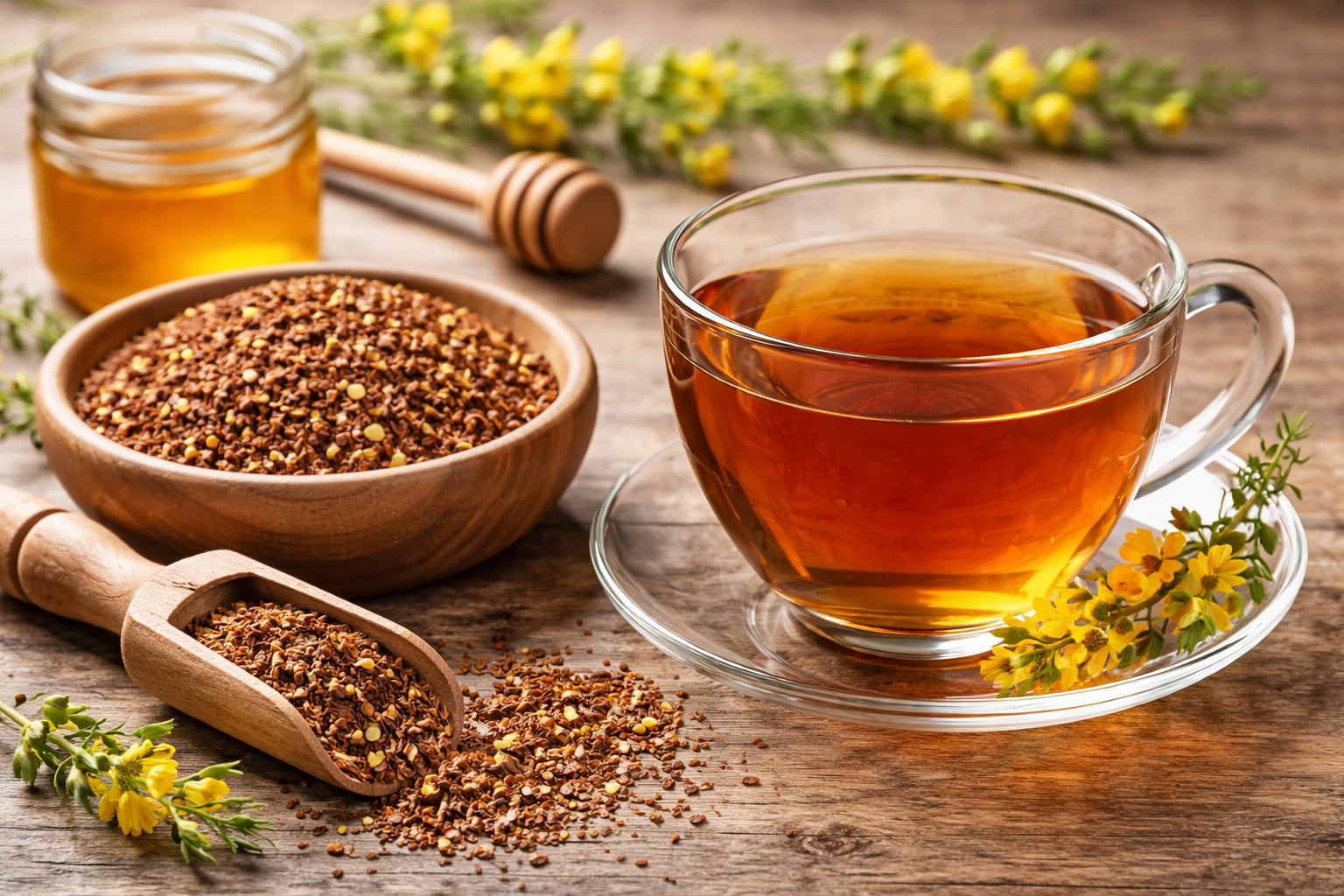
Honeybush tea is a naturally caffeine-free herbal tea that comes from South Africa. It is made from the leaves and stems of the honeybush plant, which grows mainly in coastal and mountain areas of the country. The tea gets its name from its gentle honey-like aroma, especially noticeable when the plant is dried or fermented. Honeybush tea has been consumed for generations as a daily drink and is known for its smooth taste and warm color.
Unlike traditional teas made from the Camellia sinensis plant, honeybush is an herbal infusion. This means it does not contain caffeine and is often enjoyed at any time of the day, including evenings. Over time, honeybush tea has gained international attention as people look for mild, natural beverages with simple ingredients. Today, it is available in loose-leaf form, tea bags, and blended herbal mixes.
Honeybush tea is produced from several species of the Cyclopia plant, which belongs to the legume family. After harvesting, the plant material usually goes through a fermentation process similar to that used for rooibos. During fermentation, the leaves and stems darken in color and develop a naturally sweet scent. Some honeybush tea is also sold as unfermented, which results in a lighter color and a more herbal taste.
The flavor of honeybush tea is often described as soft, naturally sweet, and slightly floral. Because it does not have bitterness, it is usually enjoyed without sugar, though honey or milk can be added if desired. Its gentle taste makes it popular with people who prefer mild herbal teas rather than strong or earthy ones.
One important characteristic of honeybush tea is that it is naturally caffeine-free. This makes it suitable for children, pregnant individuals, or anyone trying to reduce caffeine intake. Many people choose honeybush as an evening drink because it does not affect sleep. It is also commonly included in bedtime tea blends.
Honeybush tea contains antioxidants, which are natural compounds found in many plants. These antioxidants are part of the reason herbal teas are often included in wellness-focused diets. While honeybush tea is not considered a medical product, it has long been used as a general household drink in South Africa. Traditionally, it was also given warm with milk to children.
The preparation of honeybush tea is simple. Loose-leaf honeybush or tea bags are steeped in hot water, usually for five to ten minutes. Because the leaves do not become bitter, longer steeping times are common. This makes it easy for beginners to prepare without worrying about taste changes.
Honeybush tea can be enjoyed in several ways:
- Hot, as a plain herbal infusion
- With milk, similar to a mild tea latte
- Cold-brewed and served as iced herbal tea
- Blended with other herbs or spices
In recent years, honeybush tea has also appeared in flavored blends. It is often mixed with vanilla, citrus peel, or spices to add variety. These blends are popular in specialty tea shops and cafes, especially in regions where herbal teas are in demand.
From an agricultural point of view, honeybush is mostly wild-harvested, though farming has increased to support growing global interest. Sustainable harvesting practices are important because the plant grows slowly and is native to a limited area. South Africa remains the primary producer and exporter of honeybush tea.
Compared to green tea or black tea, honeybush does not contain tannins, which are compounds that can cause dryness or bitterness. This makes honeybush tea gentle on the stomach and easy to drink even on an empty stomach. Because of this, it is often chosen by people looking for a soft, everyday herbal drink.
Honeybush tea has also become popular among people interested in traditional herbal infusions and caffeine-free alternatives. It fits well into modern lifestyles where simple, natural beverages are preferred over highly processed drinks. As awareness grows, honeybush tea continues to appear in international markets alongside other well-known herbal teas.
Honeybush tea is a mild, naturally sweet herbal tea with deep roots in South African tradition. Its caffeine-free nature, smooth taste, and easy preparation make it suitable for a wide range of people and daily routines. Unlike traditional teas, it does not become bitter and can be enjoyed hot or cold, plain or blended.
As interest in herbal tea continues to grow worldwide, honeybush tea stands out for its simplicity and gentle character. It offers an alternative for those seeking a warm beverage without caffeine or strong flavors. Whether enjoyed in its pure form or as part of a flavored blend, honeybush tea remains a calm and approachable choice for everyday tea drinking.
View more teas in the links: Kukicha; Karkade.
View more drinks through the links: Iced Coffee Tea, Milkshake Smoothie, Soft drink Mocktails.