Mate tea, often called yerba mate, is a traditional drink widely consumed in South America. It is made from the dried leaves of the yerba mate plant and is especially popular in countries such as Argentina, Uruguay, Paraguay, and southern Brazil. Mate tea is known for its earthy flavor and its role in social and daily routines.
Unlike many herbal infusions, mate tea naturally contains caffeine, which gives it a stimulating quality similar to coffee or traditional tea. Because of this, it is often consumed in the morning or throughout the day. Mate tea is traditionally prepared and shared using special tools, which makes it more than just a beverage—it is also a cultural practice.
Today, mate tea is gaining attention around the world as people explore traditional drinks and plant-based infusions with long histories.
Mate tea is made from the leaves of the Ilex paraguariensis plant. After harvesting, the leaves are dried, cut, and aged before being used for infusion. This process gives mate tea its distinctive aroma and flavor. It is often considered a type of South American tea, although it is not made from the Camellia sinensis plant.
Origins and Cultural Background
Mate tea has deep roots in South American culture. Indigenous communities consumed it long before European arrival. Over time, it became a daily drink shared among families and friends. Sharing mate is traditionally seen as a social activity, often enjoyed in groups.
In many regions, mate tea is consumed multiple times a day. The ritual of preparing and sharing mate reflects hospitality and connection rather than individual consumption.
Traditional Preparation Method
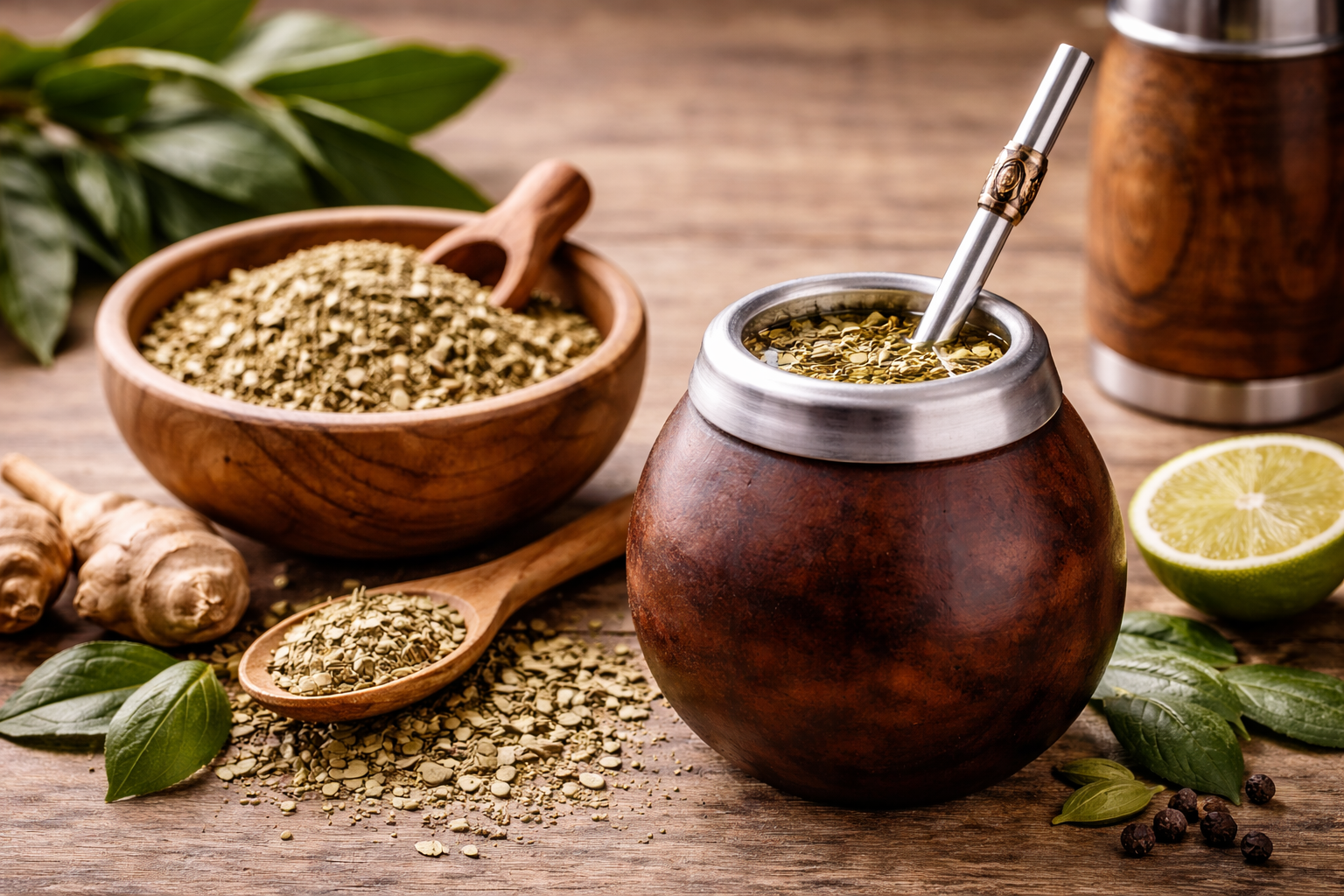
Mate tea is traditionally prepared using a hollowed gourd and a metal straw called a bombilla. The dried leaves are placed into the gourd, hot water is added, and the tea is sipped through the bombilla, which filters the leaves.
This method differs from typical tea brewing. The same leaves are often infused multiple times, producing several servings. This preparation style is a key part of mate tea culture and distinguishes it from other infusions.
Flavor Profile and Aroma
Mate tea has a strong, earthy flavor that can be slightly bitter. The taste varies depending on how the leaves are processed and aged. Some blends are smoother, while others are more robust.
The aroma is herbal and grassy, reflecting the natural characteristics of the leaves. Because of its bold flavor, mate tea is sometimes blended with herbs or citrus peels to create milder variations.
Caffeine Content and Daily Use
One notable feature of mate tea is its natural caffeine content. This makes it different from most herbal teas, which are usually caffeine-free. Because of this, mate tea is often used as a daytime drink.
Many people choose mate tea as an alternative to coffee or black tea. Its stimulating effect is one reason it remains popular in daily routines across South America.
Loose Leaf and Modern Forms
Traditionally, mate tea is prepared using loose leaves. Today, it is also available as loose leaf tea, tea bags, and ready-to-drink versions. These modern formats make it easier for people outside South America to enjoy mate tea without traditional equipment.
Despite these adaptations, the core characteristics of mate tea remain the same: strong flavor, herbal aroma, and cultural significance.
Mate Tea in Modern Tea Culture
As interest in traditional beverages grows, mate tea has found a place in global tea culture. It is often included in specialty tea shops and health-focused beverage menus.
Mate tea represents a blend of tradition and adaptability, maintaining its identity while fitting into modern lifestyles.
Mate tea is a traditional infusion with strong cultural roots in South America. Made from yerba mate leaves, it offers a bold flavor and a naturally stimulating character. Its unique preparation method and social role set it apart from other teas and herbal drinks.
With its natural caffeine content and distinctive taste, mate tea continues to be part of daily routines for many people. Modern formats such as tea bags and loose leaf options have made it more accessible worldwide while preserving its traditional identity.
As global interest in plant-based and traditional beverages grows, mate tea remains a recognizable and enduring option. Its balance of history, flavor, and everyday use helps maintain its place in both traditional and modern tea culture.
View more teas at the links: Yogi Te; Mint Te.
View more drinks through the links: Iced Coffee Tea, Milkshake Smoothie, Soft drink Mocktails.