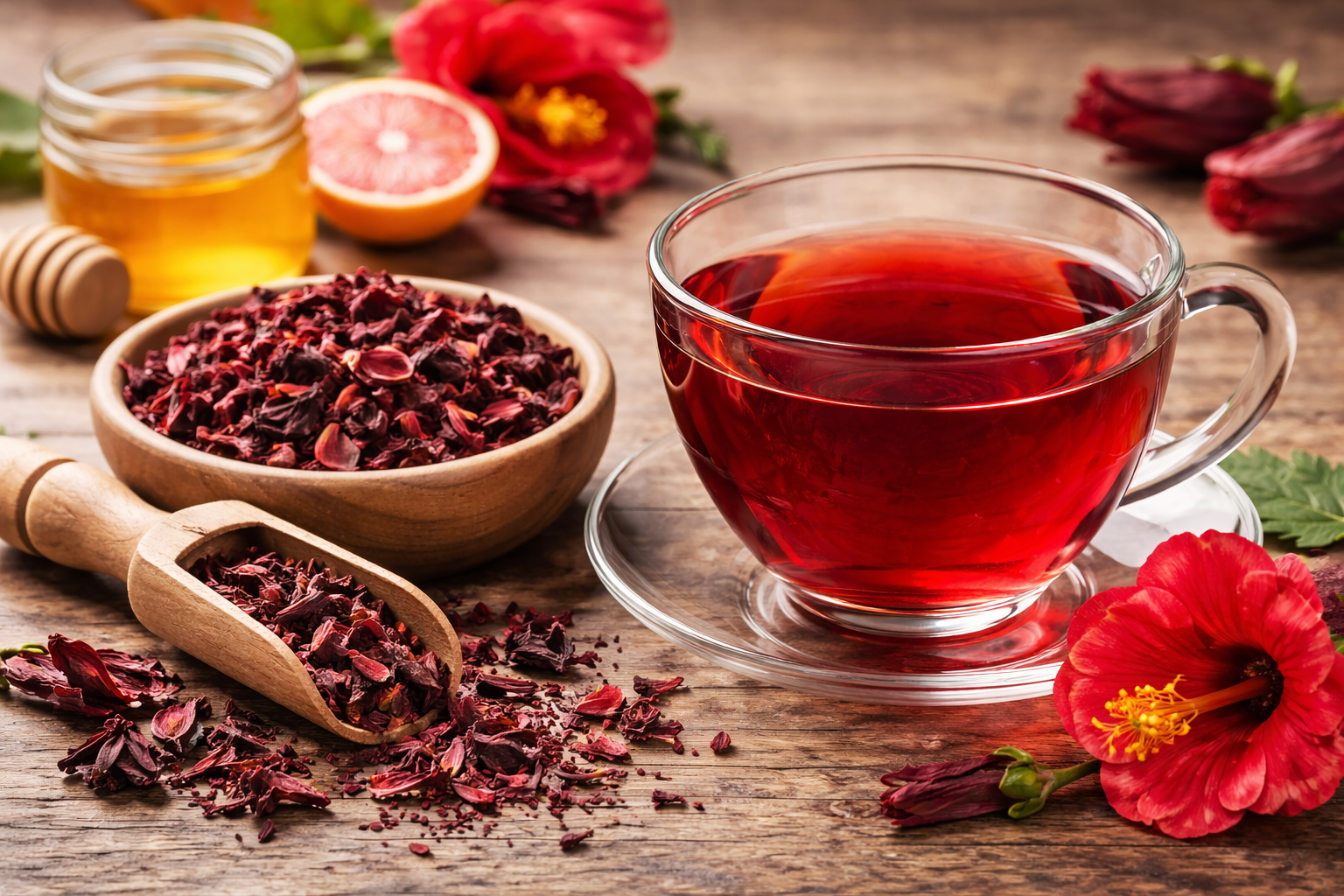
Karkade tea is a herbal tea made from dried hibiscus flowers and is known for its deep red color and refreshing taste. It is widely consumed in many parts of the world, including Africa, the Middle East, and parts of Asia. Karkade tea is often served hot or cold, depending on local traditions and climate.
Unlike traditional teas made from tea leaves, Karkade is an herbal infusion, meaning it does not contain caffeine. This makes it suitable for drinking at any time of the day. The tea has a naturally tangy flavor, sometimes compared to cranberries, and is usually enjoyed plain or lightly sweetened.
Over time, Karkade tea has become popular beyond its regions of origin, as more people explore plant-based drinks with simple ingredients. Its bold color, refreshing character, and easy preparation have helped it become a familiar drink in modern tea culture.
Karkade tea is made from the calyces of the hibiscus plant, most commonly Hibiscus sabdariffa. After harvesting, the flowers are dried and used to prepare tea by steeping them in hot or cold water. The result is a bright red drink with a clear, sharp aroma and a clean finish.
One of the most noticeable features of Karkade tea is its color. When brewed, the liquid turns a deep ruby red, which makes it visually appealing. This strong color has made hibiscus tea popular not only as a beverage but also as a base for blended drinks and traditional refreshments.
Flavor and Aroma
The flavor of Karkade tea is naturally tart and refreshing. It does not have bitterness like some teas and does not need long brewing times. The tea aroma is light and fruity, with a fresh floral note. Because of its sharp taste, many people add a small amount of sweetener, though it can also be enjoyed plain.
Hot and Cold Preparation
Karkade tea can be prepared in two main ways:
- Hot infusion, where dried hibiscus flowers are steeped in hot water
- Cold infusion, where the flowers are soaked in cold water for several hours
Both methods produce a refreshing drink, but cold-brewed Karkade tea is especially popular in warm climates. The flexibility of preparation makes it a common choice for everyday drinking.
Karkade as a Caffeine-Free Tea
Because Karkade tea is naturally caffeine-free, it is often chosen by people who avoid stimulants. It can be consumed in the evening without affecting sleep and is suitable for a wide range of age groups. This quality places it among popular herbal teas enjoyed for their simplicity and plant-based origins.
Karkade Tea in Different Cultures
Karkade tea holds cultural importance in many regions. In Egypt and Sudan, it is often served during gatherings and celebrations. In the Caribbean and Latin America, hibiscus tea is known by different names and is commonly served cold.
These regional variations show how one herbal infusion can adapt to different traditions while keeping the same core ingredients. This cultural flexibility has helped Karkade tea gain global recognition.
Loose Flowers and Storage
Karkade tea is usually sold as dried hibiscus petals, making it a type of loose leaf tea alternative, even though it is herbal. Proper storage is important to maintain color and flavor. The dried flowers should be kept in airtight containers away from light and moisture.
Modern Tea Use
In modern tea culture, Karkade tea is often blended with other herbs or fruit peels to create flavored infusions. Despite these blends, pure hibiscus tea remains widely available and appreciated for its clear identity.
Because of its strong color and refreshing taste, Karkade tea is also commonly served as an iced drink in cafés and homes.
Karkade tea is a vibrant herbal drink made from hibiscus flowers, valued for its bright color, refreshing taste, and caffeine-free nature. As an herbal infusion, it offers a simple and plant-based alternative to traditional tea, suitable for drinking at any time of day.
Its natural tartness, light tea aroma, and flexible preparation methods make it easy to enjoy both hot and cold. Karkade tea also reflects a long history of cultural use across different regions, showing how a single ingredient can be shared and adapted worldwide.
As interest in herbal teas and caffeine-free tea continues to grow, Karkade tea remains a clear and recognizable option. Its balance of simplicity, tradition, and visual appeal helps maintain its place in modern tea culture.
View more teas in the links: Kukicha; Honeybush.
View more drinks through the links: Iced Coffee Tea, Milkshake Smoothie, Soft drink Mocktails.