
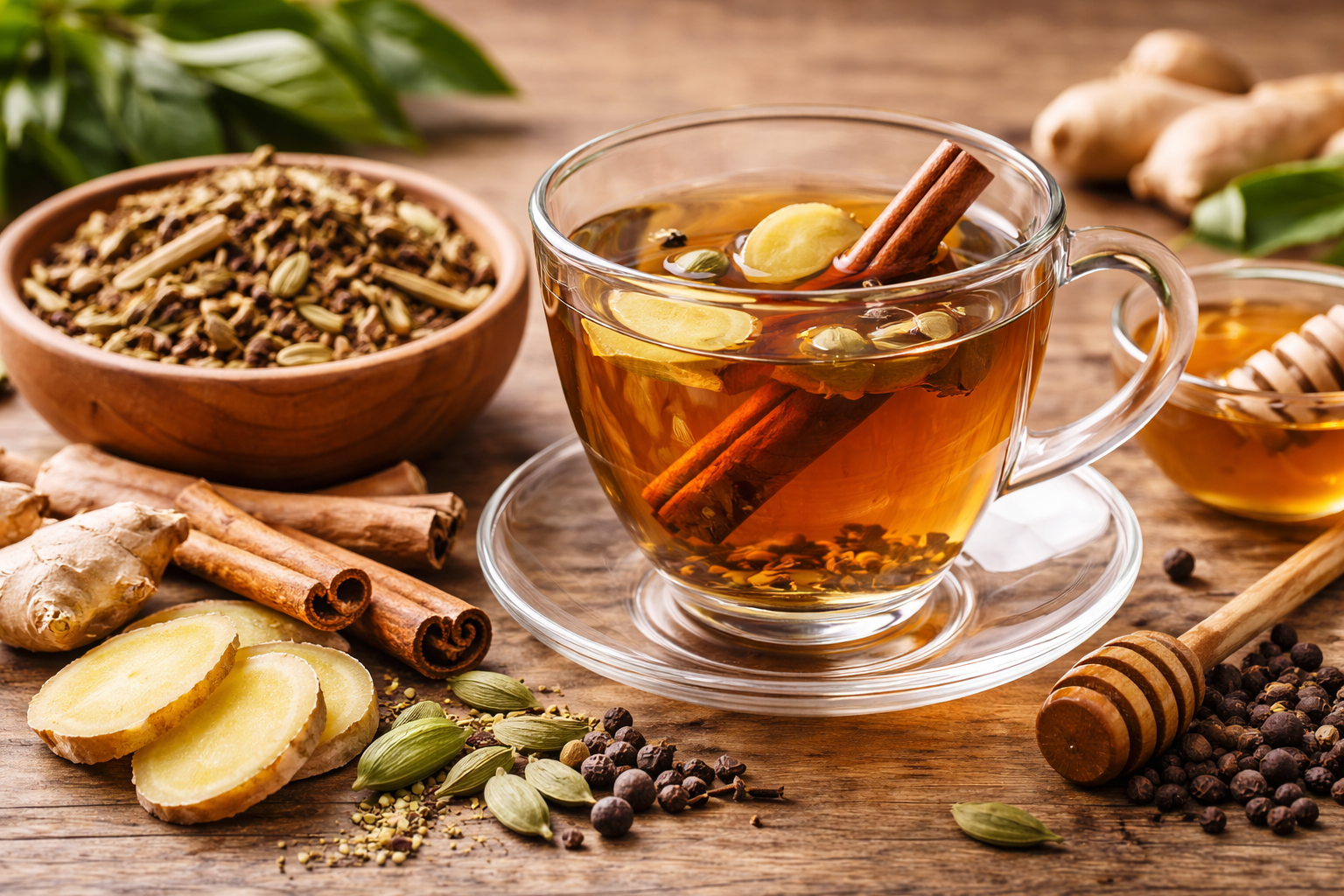
Yogi tea is a well-known type of herbal tea recognized for its rich spice blends and warming character. Inspired by traditional Indian tea practices, yogi tea combines herbs and spices to create flavorful and aromatic drinks. Unlike classic teas made only from tea leaves, many yogi tea blends are herbal infusions, meaning they may not contain caffeine.
Over time, yogi tea has become popular worldwide and is now available in many varieties. These include classic spice blends, chocolate-flavored options, and herbal mixtures designed for everyday enjoyment. Some people associate yogi tea with balance and routine, while others simply enjoy it for its taste and aroma.
Today, yogi tea is commonly found in tea shops, supermarkets, and homes. Its recognizable spice profile and wide range of blends make it a familiar part of modern tea culture.
Yogi tea has its foundation in traditional spice-based tea recipes. These recipes often combine warming spices that complement each other and create a layered flavor experience. Over time, these ideas were adapted into ready-made tea blends that are easy to prepare and widely accessible.
Origins and Inspiration
The origins of yogi tea are linked to traditional Indian spice drinks, often associated with chai-style preparations. These drinks were originally prepared by simmering spices in water, sometimes with milk. Modern yogi tea blends simplify this process while keeping the core spice combinations.
As yogi tea gained international recognition, new variations were introduced to suit different preferences and routines.
Spice Blends and Flavor Profiles
A defining feature of yogi tea is its spice composition. Many blends include cinnamon, ginger, cardamom, cloves, and black pepper. These spices create warmth and depth without relying on strong tea bitterness.
Some yogi tea blends focus on classic spice combinations, while others add cocoa or herbal ingredients for variety. For example, yogi tea choco blends combine cocoa notes with spices, offering a smoother and slightly richer taste.
Popular Yogi Tea Varieties
Yogi tea is available in many forms, each with a distinct focus:
- Classic chai yogi tea, known for its traditional spice balance
- Yogi tea chai classic, which highlights familiar chai flavors
- Yogi tea himalaya, inspired by herbal and spice combinations
- Te detox yogi, blended with herbs for light and refreshing profiles
- Chocolate and spice blends such as yogi tea choco
These variations allow yogi tea to fit different preferences and moments of the day.
Preparation and Brewing Style
Yogi tea is generally easy to prepare. Most blends are designed to be steeped in hot water, allowing the spices to release their aroma and flavor. Some people add milk or plant-based alternatives to create a smoother texture, especially with chai-style blends.
Because many yogi teas are herbal, they can be steeped longer without becoming bitter. This makes preparation flexible and beginner-friendly.
Caffeine Content and Daily Use
Many yogi tea blends are naturally caffeine-free, making them suitable for evening consumption. Other blends may include black or green tea, offering mild caffeine. This range allows yogi tea to be enjoyed throughout the day.
Due to its warming spices and aromatic nature, yogi tea is often associated with calm tea moments rather than quick consumption.
Yogi Tea in Modern Tea Culture
In modern tea culture, yogi tea represents a bridge between traditional spice drinks and contemporary tea habits. It is commonly enjoyed at home and is often chosen by people who prefer herbal or spiced teas over plain leaf-based teas.
Its continued popularity reflects growing interest in flavorful herbal tea blends that are easy to prepare and widely available.
Yogi tea is a spiced herbal tea that combines traditional inspiration with modern accessibility. Its wide range of blends, from classic chai yogi tea to herbal options like yogi tea himalaya and te detox yogi, allows it to suit many tastes and routines. The use of spices creates a rich aroma and layered flavor without relying on strong tea bitterness.
Whether prepared plain or with milk, yogi tea offers a recognizable and consistent tea experience. Its presence in modern tea culture reflects ongoing interest in herbal and spice-based drinks that are simple to enjoy. As tea habits continue to evolve, yogi tea remains a familiar and adaptable option within the broader world of herbal tea.
View more teas at the links: Mate Tea; Mint Te.
View more drinks through the links: Iced Coffee Tea, Milkshake Smoothie, Soft drink Mocktails.