
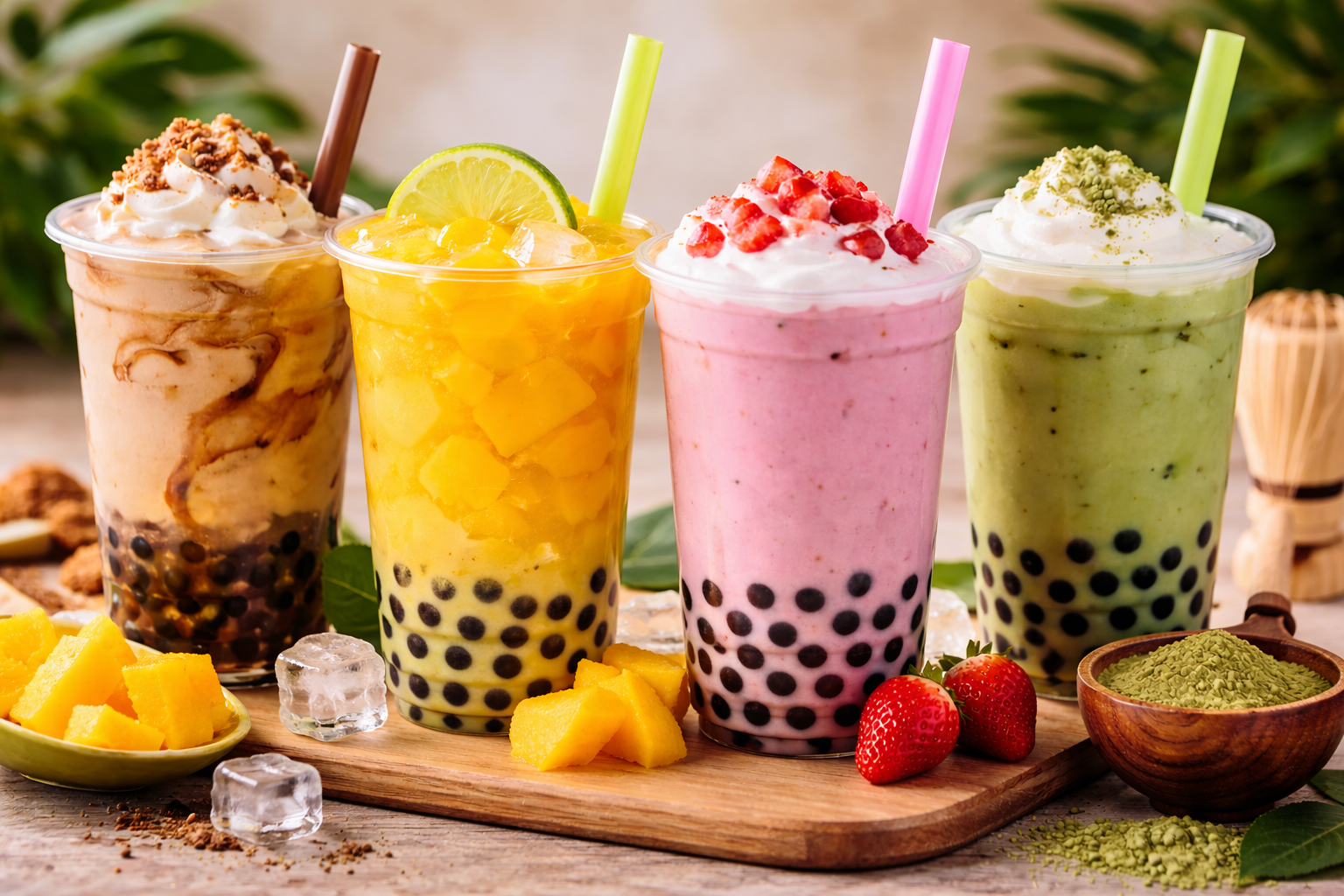
Bo Ba, often called bubble tea or boba tea, is a popular beverage that originated in Taiwan and has spread worldwide. Known for its mix of tea, milk, flavors, and chewy toppings, Bo Ba has become a common sight in cities, shopping centers, and food streets. Variations such as taro tea, milk tea, and fruit-based blends attract people of all ages. The signature ingredient—black tapioca pearls—adds texture and makes the drink visually recognizable.
Today, Bo Ba is more than a drink; it represents a growing food and beverage culture supported by thousands of bubble tea shops globally. These shops offer consistent menus while allowing room for customization. Beyond consumption, Bo Ba has also created job opportunities, especially for students and part-time workers. Understanding what Bo Ba is, how it is made, and how shops operate helps explain why this drink remains popular across different countries and cultures.
1. What Is Bo Ba and Bubble Tea?
Bo Ba, also known as bubble tea or boba, is a tea-based drink that combines brewed tea with milk or fruit flavors and chewy toppings. The most recognizable ingredient is black tapioca, often called boba pearls, which gives the drink its signature texture.
Bubble tea originated in Taiwan and quickly became popular due to its customizable nature. Today, tea bubble drinks are available in many forms, from creamy milk teas to refreshing fruit-based blends. The term bobas teas is often used to describe the wide variety of bubble tea options found on modern menus.
Basic Preparation Steps
Most bubble tea drinks are made in a simple way:
- Make tea and let it cool
- Cook the black tapioca balls
- Mix the tea with milk or flavor like taro
- Add sugar and ice
- Put everything in a cup and serve
Because the steps are simple, bubble tea can be made the same way in many places.
Tea Bases Used in Bubble Tea
The foundation of any bubble tea is the tea itself. Different teas create different flavor profiles and aromas.
Common tea bases include:
- Black tea – strong and rich, often used in classic milk tea
- Green tea – lighter and more refreshing
- Oolong tea – balanced with floral notes
- Jasmine tea – aromatic and smooth
These tea bases allow bubble tea to maintain its identity as a tea drink rather than just a flavored beverage.
Popular Bubble Tea Flavors
One reason for bubble tea’s global success is flavor variety. Customers can choose from traditional and modern combinations.
Popular options include:
*** Taro tea – creamy with a mild, slightly nutty taste
*** Milk tea – the classic bubble tea flavor
*** Fruit teas – mango, strawberry, passion fruit
*** Brown sugar boba – sweet and caramel-like
A taro set may include taro-flavored tea paired with tapioca pearls or jelly, offering both flavor and texture.
Toppings and Black Tapioca
Toppings are a key element of bubble tea. The most famous topping is black tapioca, made from cassava starch and cooked until soft and chewy.
Other toppings may include:
*** Tapioca pearls
*** Fruit jelly
*** Popping boba
*** Grass jelly
*** Aloe vera
These toppings transform bubble tea into a layered drink experience rather than a simple tea.
Bubble Tea Shop Menus and Customization
A typical bubble tea shop menu allows customers to customize:
- Tea base
- Sweetness level
- Ice level
- Toppings
This flexibility helps bubble tea adapt to different tastes and cultures. Whether ordering bubble tea boba drinks with milk or fruit-based options, customization is central to the experience.
Global Popularity of Bobas Teas
Bubble tea has spread far beyond its origins. Today, bobas teas are popular across Asia, Europe, North America, and Australia. Social media has contributed to this growth by highlighting the drink’s visual appeal and variety.
Despite regional differences, the core idea remains the same: a tea-based drink enhanced by flavor and texture.
Bo Ba represents a modern interpretation of tea that blends tradition with innovation. From classic milk teas to flavors like taro tea, bubble tea continues to evolve while remaining rooted in brewed tea foundations. The use of black tapioca and other toppings gives bubble tea its unique texture, setting it apart from other beverages.
The wide range of tea bases, flavors, and customization options allows bubble tea to appeal to many preferences. Whether enjoyed as a refreshing fruit tea or a creamy milk-based drink, bubble tea boba remains a recognizable part of contemporary tea culture. As bubble tea shops continue to appear worldwide, Bo Ba stands as an example of how tea traditions can adapt and grow in modern food culture.
View more teas in the links: Vanilla Chai Latte ; Mate Tea.
View more drinks through the links: Iced Coffee Tea, Milkshake Smoothie, Soft drink Mocktails.